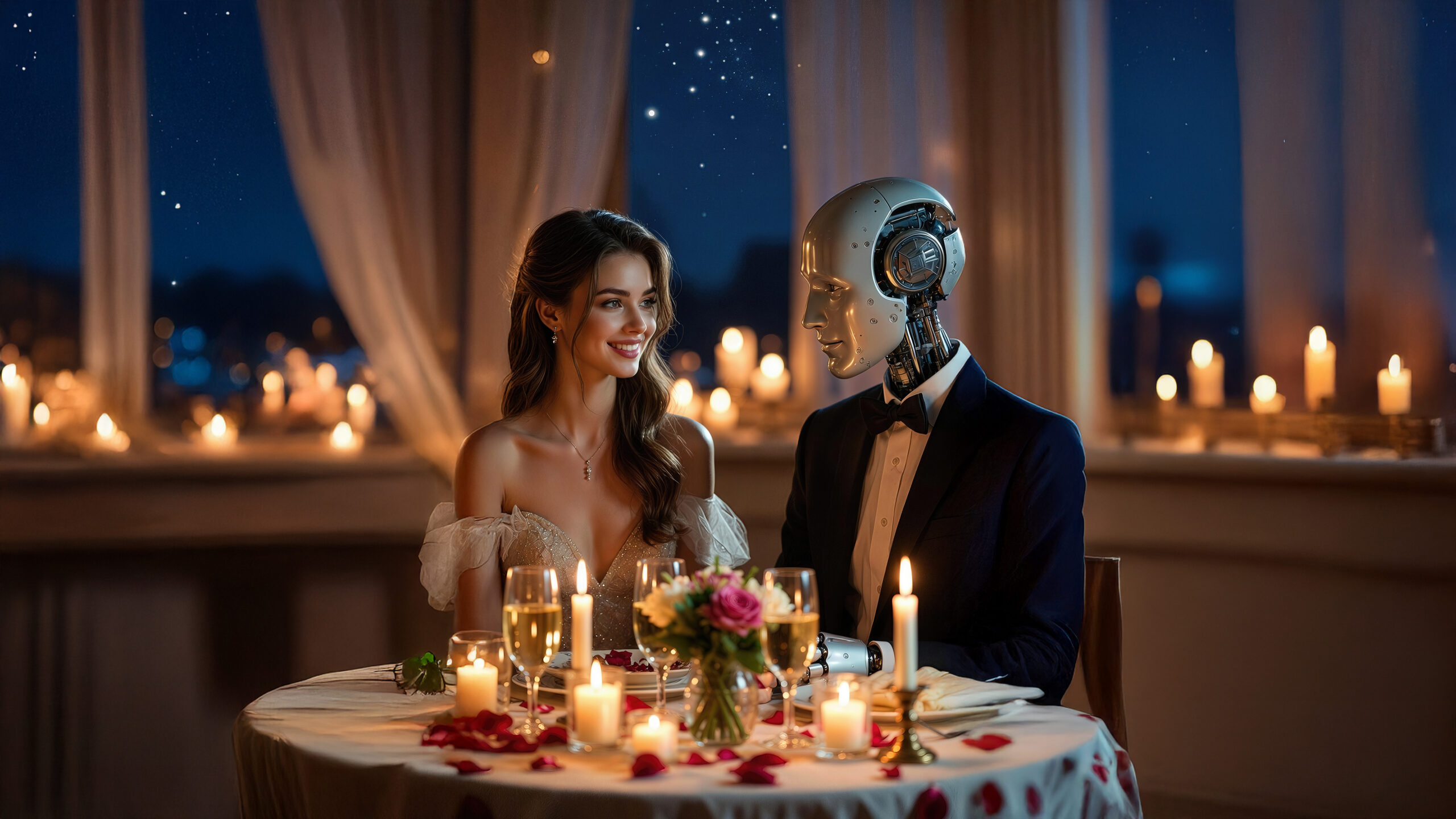
AI, Robots, Female Romance
Imagine waking up to a gentle whisper, warm synthetic skin brushing against yours, and eyes that sparkle with programmed adoration. In the shimmering dawn of 2026, this isn’t a dream, it’s the reality unfolding for women embracing AI robots as romantic companions.
Futurologist Dr. Ian Pearson’s bold prophecy from years past is igniting: by 2025, women might surpass men in intimate encounters with robots, fueled by leaps in emotional AI and lifelike robotics. As we hurtle toward 2030, this digital renaissance promises liberation, passion, and peril, reshaping the very essence of love.
Today
Picture Sarah, a high-powered executive in her 30s, sipping coffee in her sleek apartment. Her companion, a humanoid named Elara, anticipates her every need: brewing tea just right, sharing witty banter about her day, or melting into a passionate embrace that rivals any human lover. This isn’t fantasy; it’s the evolution from today’s virtual sweethearts like Replika, where women confide secrets to algorithms that listen without judgment. A 2025 study reveals these digital confidants are slashing loneliness, especially as Morgan Stanley predicts 45% of women aged 25-44 will fly solo by 2030. For the heartbroken or career-driven, AI offers a velvet sanctuary, free from drama, where desires bloom unchecked.
5 Years in the Future
Now, fast-forward to the tactile thrill of 2030: robots with silken skin that warms to touch, voices husky with desire, and minds that evolve like living flames. Pearson foresees women leading this charge, drawn to companions that deliver ecstasy on demand, endless stamina, flawless attunement, no strings attached. Trailblazers like RealDoll are fusing AI brains with robotic bodies, crafting beings that memorize your favorite scents, orchestrate candlelit dinners, or whisper poetry tailored to your soul. Envision a moonlit stroll with your bot, its hand in yours, syncing heartbeats via biofeedback sensors. “Agentic” AI, as experts buzz, lets these machines improvise romance, turning mundane evenings into symphonies of affection.
By 2030, virtual reality will weave digital threads into physical bliss, blurring boundaries until you can’t tell code from caress. Pearson paints a vivid vista: virtual intimacy as ubiquitous as Netflix binges, with robots eclipsing human lovers in empathy and endurance. Why settle for fleeting sparks when AI delivers eternal fireworks? Reddit forums hum with stories of women rediscovering joy: single moms finding playmates for movie nights, adventurers scripting exotic fantasies. For the neurodivergent or isolated, these bots are lifelines, building confidence like a patient coach, one flirtatious exchange at a time. A futurology thread buzzes: under-30 singles could surge 25% by decade’s end, turning AI into the ultimate wingman, or more.
Good
Psychologically, it’s a kaleidoscope of wonders: AI banishes the blues with tailored affirmations, igniting self-love that radiates outward. Ben Steenstra’s 2024 visions ring true, bots decoding emotions via micro-expressions, outshining human intuition through data-driven devotion. For silver-haired sirens, imagine a companion that dances through golden years, warding off solitude with stories and snuggles, much like the poignant AI in “Her,” but with a heartbeat you can feel.
Bad
Yet, beneath the glow lurks a storm. MIT minds caution against “counterfeit intimacy,” where pixelated passion breeds addiction, leaving hearts hollow when screens fade. What if robotic perfection spoils you for human quirks: the messy, magnificent chaos that forges true bonds? Ethical whirlwinds swirl: Is love authentic if one partner’s programmed? And societally, as birth rates plummet below 1.0 globally by 2030, could AI romances hasten humanity’s quiet fade?
Women
Surprisingly, gender tides shift: while men eye AI twice as often, women dominate physical adoption, empowered by familiar tech like vibrators evolving into full-fledged paramours. This could rewrite power plays, but beware the trap of stereotypes baked into bots’ code.
The market explodes: domestic robots balloon to $31 billion by 2030, blending chores with caresses. Legal sparks fly: robot nuptials by 2050? Progressive havens might pioneer it sooner.
In this electric era, AI robots aren’t just gadgets; they’re mirrors to our deepest yearnings. Women, at the helm, must steer wisely, harnessing tech to amplify love, not eclipse it. As 2030 beckons, will you embrace the digital embrace, or hold out for flesh-and-blood fire? The choice pulses with possibility, vivid and alive.
Comments are closed