Athens, Tennessee
In the sweltering summer of 1946, the small town of Athens, Tennessee, became the unlikely stage for a dramatic confrontation that pitted returning World War II veterans against a entrenched political machine. Known as the Battle of Athens, this event was not a clash between armies on foreign soil but a homegrown rebellion against local corruption. It unfolded in McMinn County, where a corrupt sheriff’s department had long manipulated elections, extorted citizens, and abused power. The “battle” highlighted the tensions of post-war America, where GIs fresh from fighting tyranny abroad returned to find it thriving in their own backyards. This episode, often overlooked in mainstream history, serves as a stark reminder of the fragility of democracy and the lengths ordinary citizens might go to defend it.
Roots
The roots of the conflict traced back to the 1930s, when Paul Cantrell, a Democratic politician backed by the powerful Crump political machine in Tennessee, seized control of McMinn County. Cantrell served as sheriff from 1936 to 1942, then maneuvered to become a state senator while installing his deputy, Pat Mansfield, as sheriff. Under their regime, the sheriff’s office became a profit-driven enterprise. Deputies, paid through a fee system rather than salaries, earned money by issuing fines and arrests, often fabricated, for minor infractions like public drunkenness or speeding. This system disproportionately targeted the poor and travelers passing through on U.S. Highway 411, turning the county into a speed trap haven. Reports of brutality were rampant: suspects beaten in custody, illegal searches, and even deaths under suspicious circumstances.
World War II
By the early 1940s, thousands of McMinn County men had enlisted to fight in World War II, leaving the corrupt officials to tighten their grip. Elections were rigged through ballot-box stuffing, voter intimidation, and outright fraud. Poll taxes and literacy tests suppressed votes, while armed deputies guarded polling places. In the 1944 election, for instance, Mansfield “won” with suspiciously high margins despite widespread discontent. But as the war ended in 1945, veterans began returning home, battle-hardened, idealistic, and outraged by what they found. These men, who had liberated Europe from fascism and defeated imperial Japan, were not about to tolerate a local dictatorship.
GI Non-Partisan League
In early 1946, a group of veterans formed the GI Non-Partisan League, a bipartisan coalition aimed at ousting the Cantrell-Mansfield machine through the ballot box. Led by figures like Knox Henry, a former Army sergeant, and Bill White, a Marine veteran, the league fielded candidates for key offices, including sheriff. Their platform was simple: clean government, fair elections, and an end to the fee system. The veterans campaigned vigorously, holding rallies and promising to serve without the corrupt incentives. Tensions escalated as the August 1, 1946, election approached. The machine, sensing a threat, imported deputies from neighboring counties and even hired thugs to patrol the polls.
Election Day dawned hot and fraught with anxiety. Voting proceeded amid reports of irregularities: ballots pre-marked for machine candidates, voters turned away, and poll watchers harassed. In one precinct, a black voter named Tom Gillespie was shot by a deputy for insisting on his right to vote, a stark violation that fueled outrage. As polls closed, deputies seized ballot boxes and retreated to the county jail in Athens, intending to “count” the votes in secret. The veterans, anticipating this, had stationed observers, but many were arrested on trumped-up charges.
Battle
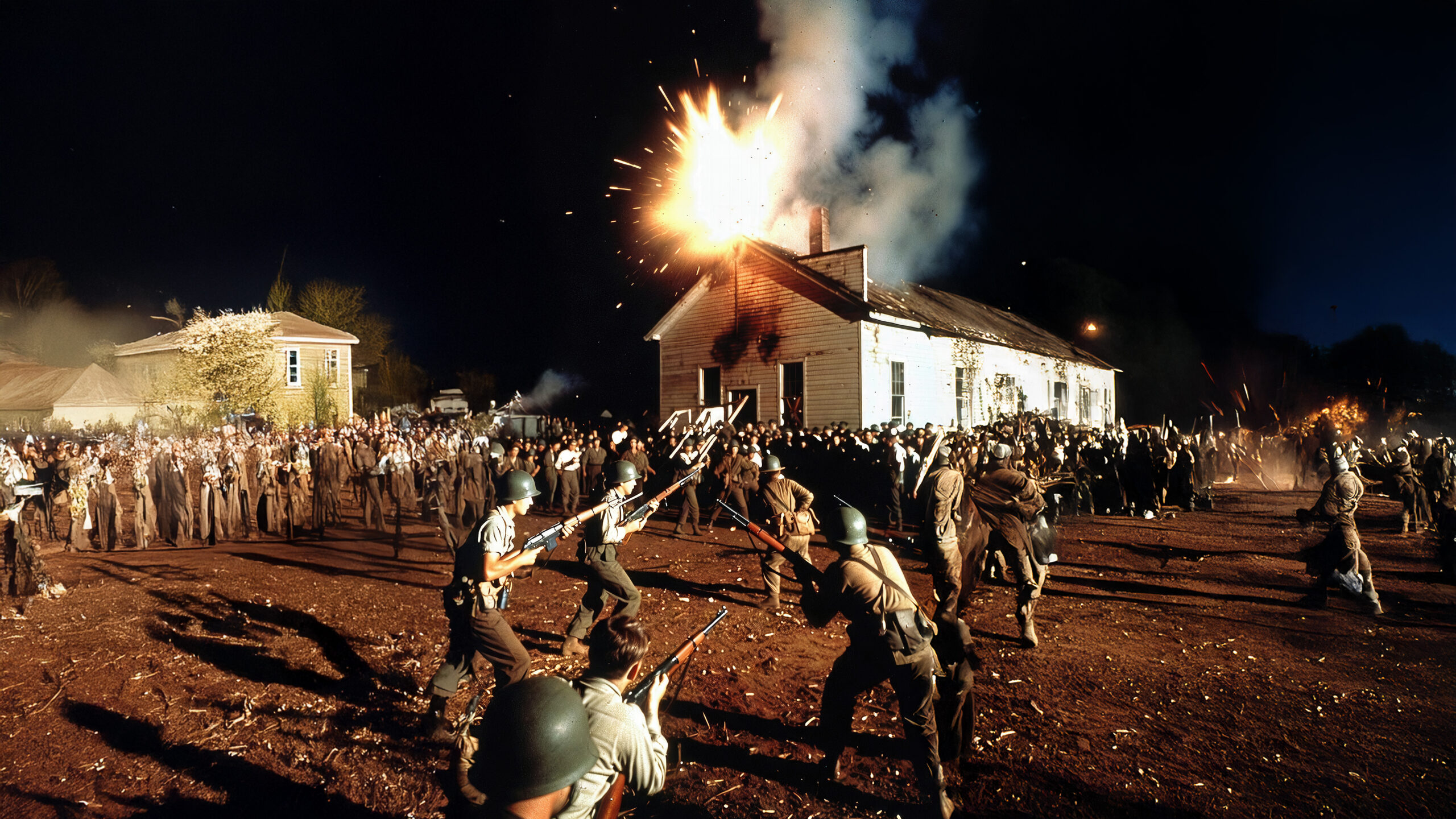
What followed was the spark that ignited the battle. Around 60 veterans, many armed with rifles and pistols from their military service, gathered at a local garage. They decided to act. Borrowing dynamite from a nearby quarry, they besieged the jail where the ballot boxes were held. Gunfire erupted around 9 p.m., with deputies inside firing back from the windows. The veterans, using military tactics, cut power lines to darken the town and lobbed dynamite at the jail’s walls, blasting holes but avoiding fatalities. The siege lasted several hours, drawing a crowd of spectators and even attracting national media attention via radio broadcasts.
By 3:30 a.m. on August 2, the deputies surrendered, battered but alive. No one was killed, though several were wounded. The veterans secured the ballot boxes and, under guard, transported them to a neutral site (a local high school) for a public count. The results were decisive: the GI candidates swept the election, with Knox Henry becoming the new sheriff. Cantrell and Mansfield fled town, never to return.
Reform
The aftermath brought swift reforms. The fee system was abolished, replaced by salaried positions. The new administration cleaned house, prosecuting corrupt officials and restoring trust in local government. Nationally, the Battle of Athens drew mixed reactions. Some outlets praised it as a patriotic stand against tyranny, while others decried it as vigilantism. Time magazine called it “the most sensational political development” of the year. The American Legion and other veterans’ groups rallied in support, and the event inspired books, articles, and even a 1992 TV movie, “An Innocent Man.”
Yet, the Battle of Athens faded from collective memory, overshadowed by the Cold War and civil rights struggles. Historians debate its legacy: Was it a justified uprising or a dangerous precedent? Proponents argue it exemplified the Second Amendment’s role in protecting against government overreach, a view echoed in modern gun rights discourse. Critics warn of the risks when citizens take law into their own hands.
In today’s polarized America, the Battle of Athens resonates anew. It underscores how corruption can erode democracy from within and how ordinary people, empowered by experience and resolve, can reclaim it. As one veteran reflected years later, “We fought a war to free the world from dictators, and we came home to find one in our own county.” This 1946 skirmish in rural Tennessee reminds us that the fight for fair governance is eternal, demanding vigilance beyond the battlefield.
Comments are closed