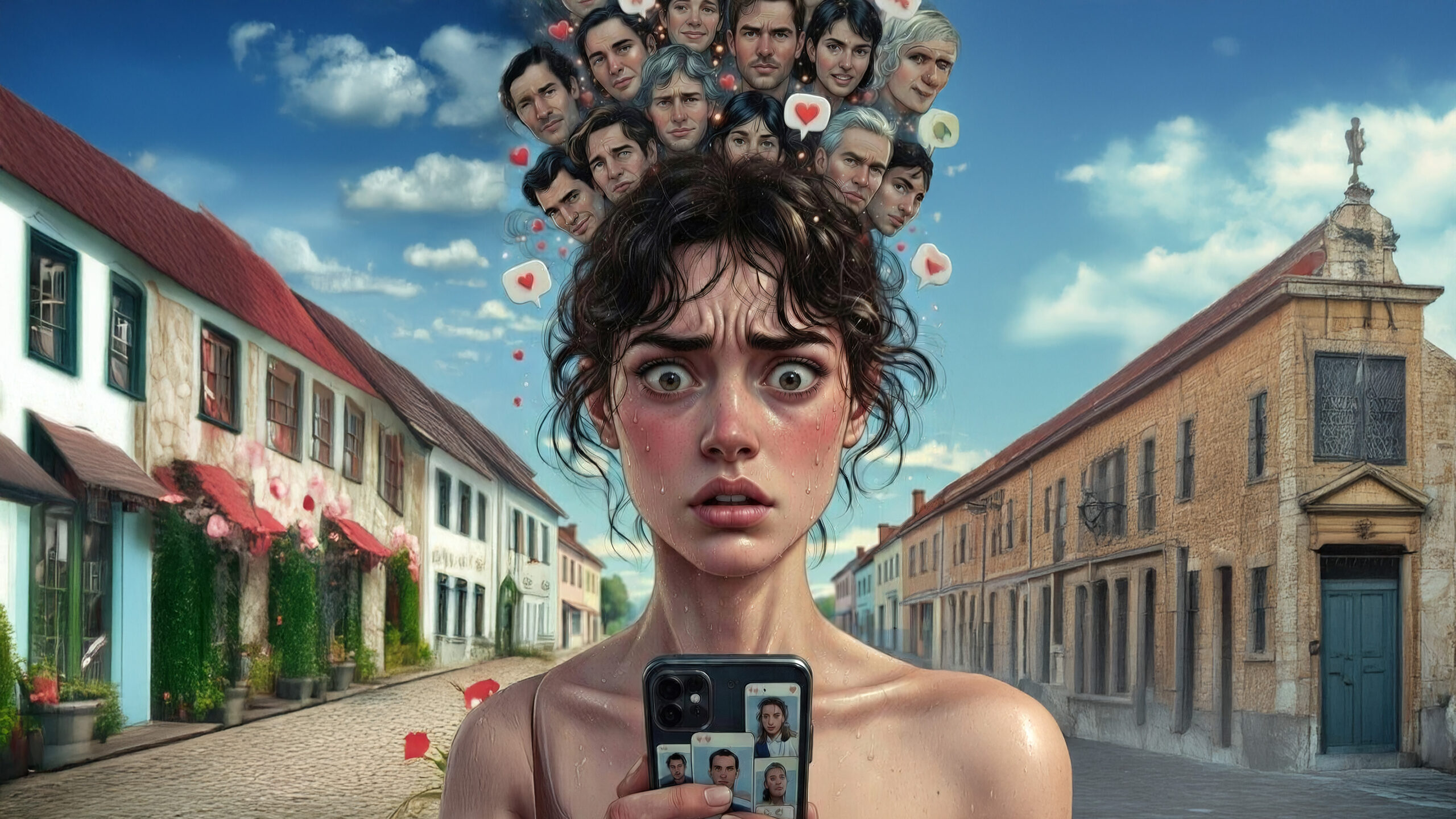
Paradox of Choice
Why Dating Apps Have Made Finding “The One” Feel Impossible for Me
I’ve come to a frustrating conclusion: dating apps may have ruined my chances of finding a husband.
My grandparents met in a small town of 5,000 people, chose each other from maybe ten realistic options, and stayed married for 60 years. I have access to every single man within a 50-mile radius (or the whole world) and somehow that makes everything harder.
I’m not the only one who feels this way. I see thousands of women my age saying the same thing online and in conversations with friends. The technology that was supposed to make finding love easier has, for many of us, made it paralyzing. The problem boils down to something psychologists call the paradox of choice.
In the 2004 book The Paradox of Choice: more options don’t always mean better outcomes or more happiness. In fact, they often create anxiety, dissatisfaction, and regret. When choices are limited, we invest deeply in what’s in front of us and figure out how to make it work. When choices feel endless, every decision comes with the nagging question: “What if there’s someone better out there?”
Dating Apps
Dating apps are the ultimate example of this paradox. Tinder, Bumble, Hinge: they flood my phone with profiles. As an attractive woman in a decent-sized city, I can get hundreds of matches in a week. Every swipe right opens a new possibility: someone taller, funnier, more successful, better traveled, more charming. My brain starts treating potential partners like items in an infinite online store.
Back in the Day
My grandparents’ generation didn’t have that. They met through school, work, church, the neighborhood bar, or family setups. Their dating pool was tiny, limited by geography and social circles. You didn’t see every eligible person in your age range; you only saw the ones who crossed your path. With fewer visible alternatives, people committed earlier and more willingly. Society expected it: marriage was the norm, divorce carried real stigma, and endless “shopping around” simply wasn’t an option.
Now that built-in scarcity is gone. Apps turn romance into a game of thumbnails and clever bios. Attraction starts almost entirely with photos and a few lines of text, bypassing the slow, organic discovery that used to build real connection. Even when I meet someone promising, knowing hundreds of other options are just a swipe away makes me hesitate. Why go all-in when the next profile might be the “perfect” one I’ve been waiting for?
I’ve read the research, and it confirms what I feel. Studies show online daters deal with higher choice overload and decision fatigue. One 2023 paper found heavy app users reported lower relationship satisfaction and higher breakup rates than people who met offline. Another Stanford study noted that couples who meet online are slightly more likely to split in the early years. Apps have opened doors, especially for, rural folks, or those with specific preferences, but the sheer volume can make it hard to truly invest in any one person.
Of course, apps aren’t all bad. About 30% of couples now meet online, and plenty of those relationships are happy and lasting. They break down geographic and social barriers that once kept compatible people apart. For someone with a busy schedule or who’s introverted, they’re a convenient starting point. The issue isn’t the apps themselves; it’s the mindset they foster, one of constant optimization instead of contented commitment.
So how do I escape this trap?
I’ve started experimenting with intentional limits. Sometimes I delete the apps completely and focus on meeting people in real life through hobbies, sports leagues, volunteering, or friend introductions, just like my grandparents did. When I do use apps, I set strict rules: only talk to three people at once, move quickly to in-person dates instead of endless texting, and define my non-negotiables upfront (shared values, wanting kids someday, basic compatibility) to shrink the pool.
The mindset shift that’s helped most is “satisficing”: choosing “good enough” instead of chasing the mythical best. I remind myself no one will check every box, and real love grows through effort and time, not instant perfection.
My grandparents didn’t have a better love because they had fewer choices; they had stronger commitment because limited options forced them to pour everything into the person they picked. I can recapture some of that, not by swearing off technology forever, but by treating abundance as a tool, not a trap. By deciding to decide, fully and without constant second-guessing, instead of swiping endlessly for someone just a little bit better.
Comments are closed