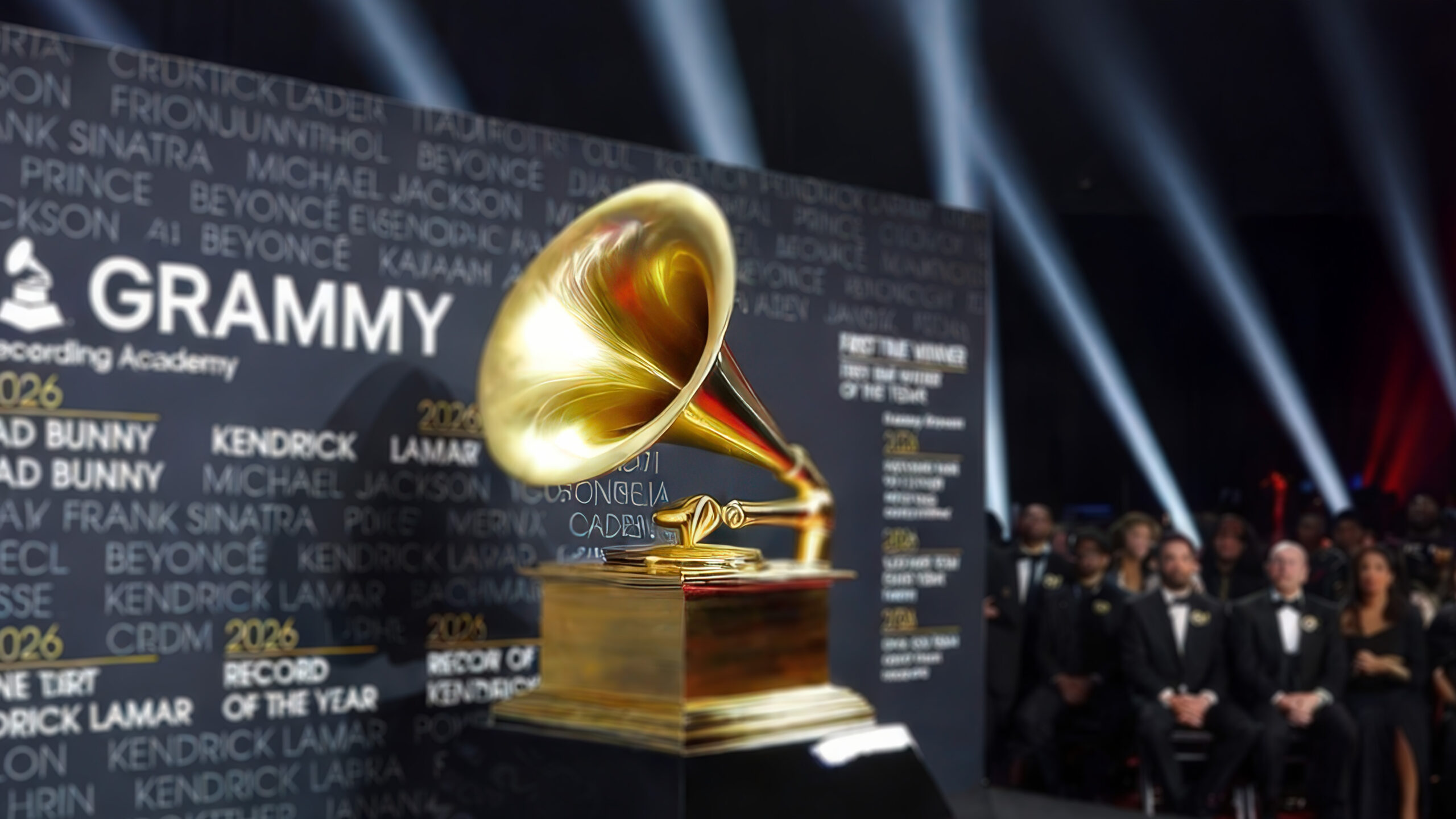
Is It Still Relevant?
Every year, music’s biggest night promises glamour, surprises, and a few unforgettable moments. But as the credits rolled on the 2026 Grammys just 24 hours ago, one question lingered louder than the after-parties: do the Grammys still matter to the rest of us?
For decades, they absolutely did. Launched in 1959 as the Gramophone Awards, the Grammys quickly became music’s version of the Oscars: a glittering stamp of approval that could catapult an artist into the stratosphere. Early winners like Frank Sinatra and Ella Fitzgerald didn’t just receive trophies. They gained cultural immortality and watched their album sales soar. A single golden gramophone could turn a rising star into a household name overnight.
The numbers tell the story of their peak power. In 1984, 51.7 million people tuned in to watch Michael Jackson sweep eight awards for Thriller, cementing pop’s global reign. Even through the ’80s and ’90s, viewership regularly topped 30 million. Wins carried real weight: Linda Ronstadt’s 1988 Grammy for Canciones de Mi Padre helped make it the best-selling non-English album in U.S. history, cracking open the mainstream door for Latin music. Beyoncé’s repeated triumphs sparked national conversations about race, gender, and power. The ceremony didn’t just celebrate music. It shaped it, spotlighted philanthropy through Lifetime Achievement honors (Emmylou Harris in 2018 among them), and mirrored America’s evolving values, from civil rights anthems to bold genre crossovers.
Never Perfect
Of course, the Grammys were never perfect. Critics long accused the Academy of favoring blockbuster sales over critical gems, of sidelining global voices in favor of Western stars, and of perpetuating biases that kept nominations overwhelmingly white and male for decades. Winners often felt emboldened to take bigger creative risks. Repeated losers sometimes played it safer. Yet even the flaws couldn’t dim the event’s cultural glow. For generations, the Grammys were the one night when music felt like it belonged to everyone.
Fast-forward to today, and the picture looks different. Viewership has plummeted: 39.9 million in 2012, down to 16.9 million in 2024, and a further slide to 15.4 million in 2025. Streaming, cord-cutting, and endless scrolling have scattered audiences like never before.
2026
Last night’s show on February 1, 2026 crystallized the debate. Trevor Noah, hosting for the final time, delivered a safe but uninspired performance that left many underwhelmed. Yet the night still delivered electric moments: Bad Bunny made history as the first Spanish-language artist to win Album of the Year, Kendrick Lamar used his speech to confront ICE raids and immigration policy in clips that instantly went viral, and women swept the Big Four categories for the seventh time. Attendees wore “ICE Out” pins, turning the red carpet into a subtle protest. New categories like Best African Music Performance nodded toward global inclusivity, even if critics called the effort half-hearted.
Still, skeptics abound. Many felt the nominations chased Hot 100 chart dominance rather than critical consensus, and country music once again got short shrift in the performance lineup. Best New Artist contenders now average 5.4 years since their debut, hinting at a preference for safer, more established bets.
Will Anything Change in the Future?
As the broadcast heads to ABC in 2027 with promises of fresh energy and nostalgic surprises, the core question remains: in an era when anyone can go viral overnight, do we still need an academy to tell us what’s great?
The answer isn’t a simple yes or no. The Grammys may never again command 50 million viewers, but last night proved they can still spark conversation, crown historic firsts, and thrust urgent issues into the spotlight. They have adapted, imperfectly, to a fragmented world. Whether that’s enough to keep them essential is up to the audience.
Comments are closed