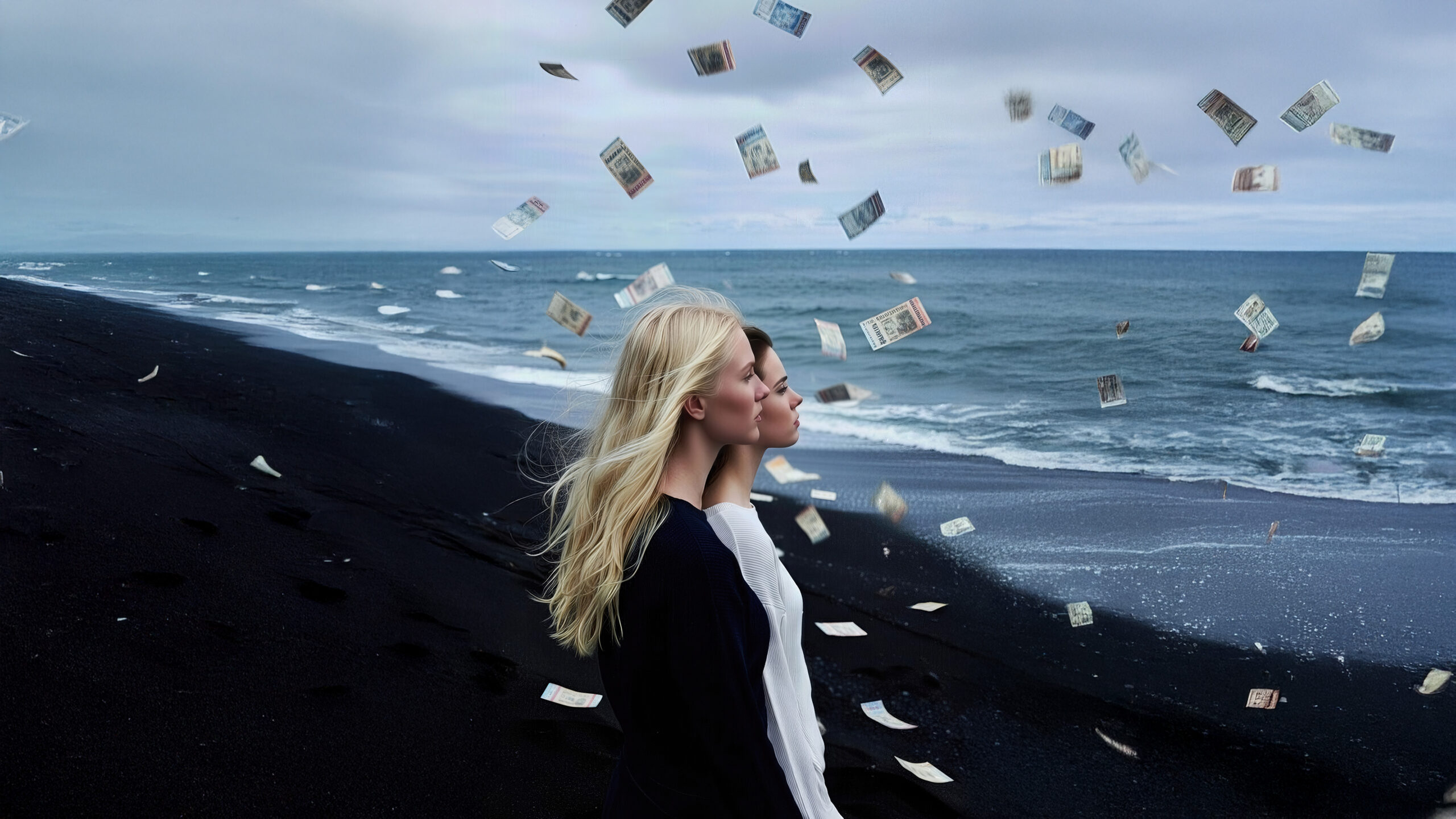
Lessons for Global Economies
A currency born from volcanic islands, battered by economic storms, and forged in the fires of independence. That’s the Icelandic króna, known as ISK and symbolized as kr, the official money of this rugged Nordic nation. Its story is a rollercoaster of rebellion, runaway inflation, and global financial hurricanes. Unlike most currencies split into cents or pennies, the króna ditched its fractional subunits, called aurar, back in 2003. Now it’s a pure integer powerhouse, simplifying transactions in Iceland’s compact economy, driven by fishing fleets, booming tourism, and cutting-edge renewable energy. As of February 2026, one US dollar buys around 123 ISK, making the króna roughly like a dollar scaled up by a factor of 100 to keep everything in whole numbers, no decimals needed.
History
Iceland’s currency tale starts in chains. In the late 1800s, the island adopted the Danish krone, introduced in 1874 to replace the old rigsdaler. By 1885, Iceland began printing its own krone notes, a subtle push toward financial freedom even under Danish rule. The word “króna” translates to “crown” in Icelandic, linking it to Scandinavian siblings like Sweden’s krona and Norway’s krone, all rooted in the 19th-century Scandinavian Monetary Union. These linguistic threads highlight deep regional ties, but Iceland’s path soon diverged amid rising waves of nationalism.
World War I sparked the first big rupture. In 1918, Iceland seized sovereignty from Denmark, launching an independent króna pegged one-to-one with its Danish counterpart. Coins debuted in 1922, etched with nautical symbols that celebrated the sea. Early notes and coins divided into 100 aurar, borrowed from the Latin “aureus” meaning golden, though no actual gold backed them. This decimal system aligned with global norms, but Iceland’s isolated, resource-dependent world would soon strain it to the breaking point.
After World War II, rapid industrialization and population growth ignited fierce inflation. Iceland joined the Bretton Woods system in 1945, tying the króna to the US dollar, but repeated devaluations hammered it starting in 1949 as export patterns shifted.
The 1970s brought hyperinflation’s fury, fueled by oil crises, explosive wage hikes, and the Cod Wars, those heated fishery disputes with Britain. Inflation soared past 50 percent a year, eroding the aurar’s value and rendering tiny coins worthless.
1981 Reset
Then came the pivotal reset in 1981. To tame the chaos, Iceland revalued its currency: 100 old krónur (coded ISJ) became one new króna (ISK). Higher-denomination notes rolled out, starting at 500 kr, to restore public confidence. The Central Bank of Iceland, established in 1961, took full control of issuance, bolstering monetary independence.
Inflation lingered into the 1990s, prompting bold reforms like inflation targeting in 2001. The aurar, once the jingling kings of pockets, faded amid price surges. Coin production halted in 1995, and they were fully phased out in 2003. This bold move made the króna one of the world’s few integer-only currencies, rounding all deals to whole numbers. Stores adjusted prices accordingly, and digital payments glided through seamlessly. It fits perfectly with Iceland’s cash-shunning culture, where cards and apps reign supreme.
The 2008 financial crisis hit Iceland like a glacier calving into the sea. Overleveraged banks collapsed, slashing the króna’s value by half overnight against major currencies. Capital controls, imposed in 2008 and lifted by 2017, stabilized the ship but restricted outflows.
A tourism explosion followed, strengthening the króna until COVID-19 sapped its vitality. Today, it rides waves from aluminum exports and geothermal power.
The króna offers flexibility in turbulent seas, but critics argue its small scale amplifies shocks, sparking debates about adopting the euro. Yet Icelanders cling to it for that spark of sovereignty.
Targeting 2 to 3 percent inflation, the Central Bank intervenes during storms. In our digital era, contactless payments dominate, sidelining cash, but physical money lingers for tourists and tradition. As Iceland confronts climate change and new frontiers, the króna symbolizes resilience: from Danish dependence to fierce self-reliance, it’s a testament to enduring spirit.
What can the world learn from this Nordic epic? Plenty.
First, small open economies must conquer volatility. Iceland’s dependence on resources echoes countries like Norway or New Zealand, where commodity swings require agile currencies. Floating exchange rates, as Iceland demonstrates, soak up shocks far better than fixed pegs, allowing devaluations to soften impacts without devastating budgets.
Second, inflation is a monster that demands constant vigilance. Iceland’s hyperinflation scars led to empowered central banks and targeted policies. Struggling nations like Turkey or Argentina could follow suit: strengthen institutions, break wage-price spirals, and diversify beyond raw materials to shield against global jolts.
Third, the choice between currency sovereignty and integration is profound. Iceland’s euro deliberations mirror Scotland’s pound questions or the Baltic states’ euro adoption. Keeping your own money preserves crisis control, as 2008 proved; joining a union trades autonomy for steadier trade. Small economies must weigh it carefully: is national pride worth the risk?
Fourth, digital innovations smooth radical changes. Scrapping subunits eased Iceland’s shift to cashless living, offering a model for Sweden or Canada pursuing crypto or app-based systems. Still, keep physical options alive to avoid excluding anyone in the tech divide.
True strength comes from adaptation. Iceland’s króna, tempered in turmoil, reminds us that economies flourish by updating policies, cherishing heritage, and preparing for the unknown. In an age of pandemics and environmental upheaval, this Icelandic lesson echoes everywhere: flexibility builds unbreakable fortitude.
Comments are closed