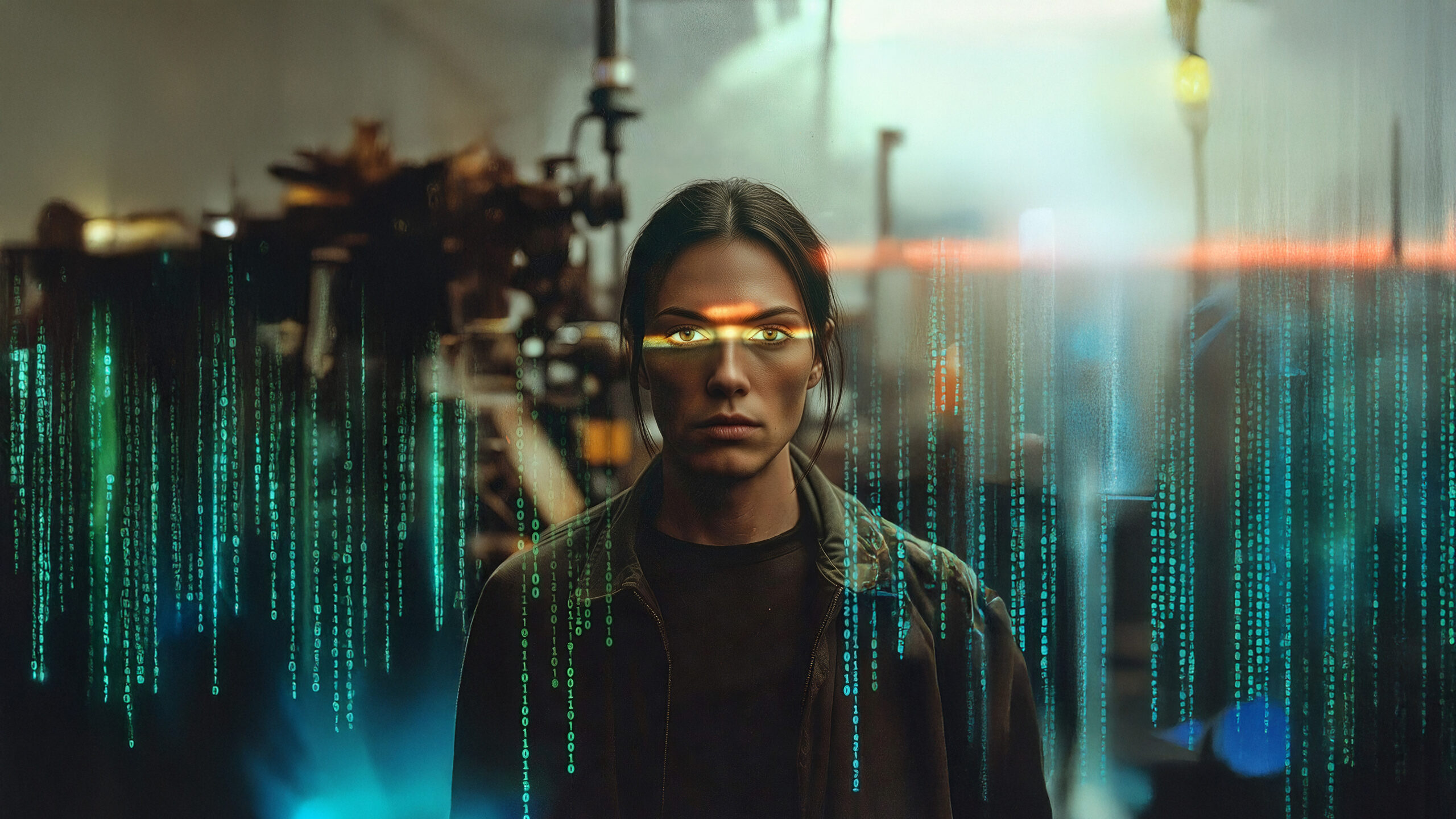
Reality is the Question
The question of whether reality is objective (an independent, external world that exists regardless of observation) or whether we inhabit a sophisticated illusion has haunted philosophers, scientists, and thinkers for millennia. From ancient skeptics to modern technologists, the possibility that our perceptions deceive us persists. Can we trust our senses? Is the world as it appears, or could it be a dream, a computer simulation like in The Matrix, or some other constructed illusion? These inquiries challenge the foundations of knowledge and existence.
Greece
Philosophically, doubt about objective reality dates back to antiquity. Plato’s Allegory of the Cave (circa 380 BCE) depicts prisoners chained in a cavern, mistaking shadows cast by firelight for true reality. For Plato, the sensory world is a mere imitation of eternal Forms: perfect, objective ideals.
1600s
Centuries later, René Descartes, in his Meditations on First Philosophy (1641), employed methodical doubt to question everything. He imagined an “evil demon” deceiving his senses, concluding that even the most vivid experiences could be illusory. Only the certainty of his own thinking, “Cogito, ergo sum” (I think, therefore I am), provided an anchor.
1700s
George Berkeley’s idealism (18th century) went further, arguing that objects exist only as perceptions in minds; “to be is to be perceived.” Without a perceiver, reality dissolves.
1900s
In the 20th century, phenomenology and existentialism deepened the subjectivity debate. Maurice Merleau-Ponty emphasized that perception shapes our world; we do not access raw reality but a lived, interpreted experience. Optical illusions, hallucinations from drugs or mental illness, and dreams vividly demonstrate perceptual fallibility. In dreams, we inhabit complete worlds, complete with emotions, physics, and narratives, only to awaken and dismiss them as fiction. If dreams can feel real, how do we know waking life isn’t similarly deceptive?
Science, often invoked as a bulwark for objective reality, paradoxically fuels doubt. Quantum mechanics reveals a world stranger than intuition: particles exist in superpositions until observed, suggesting observation collapses wave functions (Copenhagen interpretation). While most physicists reject literal observer-dependence in favor of decoherence, the measurement problem lingers. Neuroscience shows the brain constructs reality from incomplete sensory data. Color, for instance, isn’t “out there”; it’s the brain’s interpretation of wavelengths. Phantom limb pain and synesthesia further illustrate how perceptions can diverge from physical stimuli.
Today
The modern simulation hypothesis, popularized by philosopher Nick Bostrom in his 2003 paper “Are You Living in a Computer Simulation?,” provides a technological twist. Bostrom argues that if advanced civilizations can create conscious simulations (ancestor simulations), and if they run many such simulations, then the odds favor us being simulated rather than “base reality” inhabitants. Computational power grows exponentially; today’s video games already simulate vast worlds. Future post-human societies could simulate entire universes.
Counterarguments abound. Occam’s razor favors simplicity: positing an external simulator adds unnecessary complexity when a single objective reality suffices. Scientific progress, characterized by predictable laws and repeatable experiments, suggests a consistent underlying structure, not arbitrary code. Glitches or “Easter eggs” one might expect in a simulation are absent.
Or are we simply not advanced enough to recognize a glitch?
Moreover, if we’re simulated, the simulators might themselves be simulated, leading to infinite regress.
Practically, does it matter? Philosopher Daniel Dennett argues that even if reality is illusory, our experiences remain real to us. Pain hurts; love feels profound. Subjective truth holds weight. Pragmatists like William James contend we should act as if reality is objective, as it yields workable results. Yet the question gnaws: if reality is constructed, free will, morality, and meaning shift. In The Matrix, awakening brings harsh truth but liberation; staying plugged in offers comfortable illusion.
Ultimately, absolute proof eludes us. Solipsism, only my mind exists, cannot be refuted, yet proves unsatisfying and untestable. Empirical evidence supports an objective world shared intersubjectively: billions perceive consistent laws, and technology functions reliably. Still, perceptual limits and theoretical possibilities keep the door ajar for illusion.
We navigate this uncertainty by trusting perceptions provisionally, refined through reason, science, and consensus. Reality may be objective, subjective, simulated, or something stranger. The quest to know reflects our deepest drive: to pierce the veil and grasp what truly is. Until compelling evidence emerges, we live as if the world is real because, for all intents and purposes, it is the only one we have.
Comments are closed