Serene
It all began on a rainy evening in San Francisco, the kind where the streets glistened under streetlights and the chill seeped through my coat as I hurried along.
After a draining day, I ducked into a small, dimly lit venue in the Mission District for shelter. The faint sign outside promised an experimental music night, but inside, the air was thick with the scent of old wood and anticipation, a low murmur of voices blending with the distant patter of rain on the roof. That was the moment I first encountered Serene on stage.
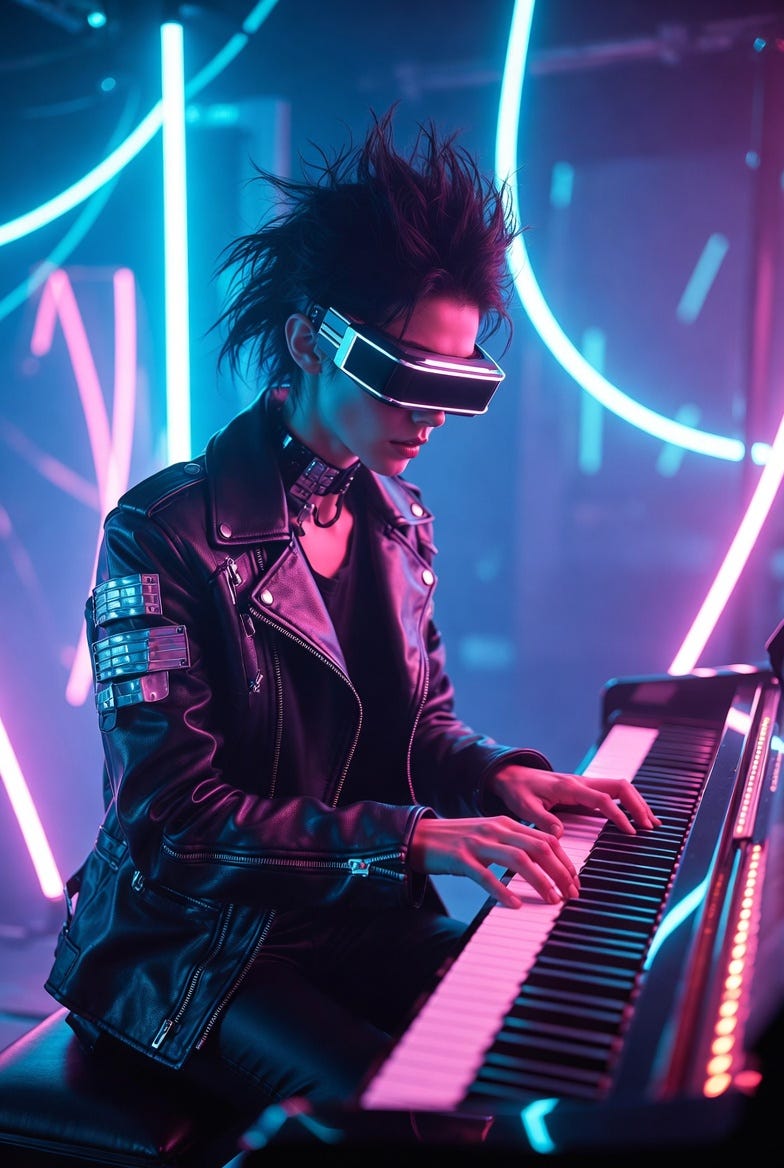
She emerged without announcement or flourish. No orchestra swelled behind her, no elaborate lights at first. Just her, seated at a massive Bösendorfer piano, its black lacquer gleaming softly under warm spotlights, and a vast screen behind her pulsing faintly with abstract patterns, like digital breath. As her fingers descended onto the keys, Rachmaninoff’s Piano Concerto №2 erupted, rich and thunderous, the notes filling the space with velvet depth and crystalline highs. But it was more than sound. Swirling colors exploded across the backdrop, vivid blues and fiery reds blooming in real-time, generated from her brainwaves captured by an EEG headset, AI translating her audiovisual synesthesia into living visuals that danced with every crescendo and delicate trill. The air seemed to vibrate, the scents of the room fading as raw emotion poured through sound and sight, a fusion of classical power and futuristic immersion. The Paris Review had called her performances “a spectacle to match the New York Philharmonic,” and in that intimate space, it felt even more intimate, more overwhelming.
Bach
I stood frozen, breath caught in my throat. Her playing was fierce yet fluid, drawing from Bach’s intricate counterpoint to Ligeti’s modern edges, Ravel’s haunting Gaspard de la Nuit mastered in feverish all-night sessions. Each phrase carried a spiritual weight, profound and transcendent. This was no polished conservatory prodigy. Serene’s journey was raw and unconventional: a former hacker and Google engineer who abandoned code for the piano that had haunted her since childhood. She had slipped into empty theaters at dawn to practice, funded her first instrument through programming, and risen as a Bösendorfer artist, gracing stages from the gilded Vienna Musikverein to the echoing hull of a decommissioned Boeing 747.
Performance
Yet it was her performance art that gripped me deepest, the seamless blend of music and innovation. She had collaborated with Blue Man Group founders, composed for Kanye West’s opera at Lincoln Center, improvised with musical robots, and even performed amid the hum of a fusion energy facility alongside Jaron Lanier. Her concerts transcended notes; they were total immersions, with moving abstractions projected behind her, transforming sound into swirling visual poetry that I could almost taste, synesthetic bursts of color and form. I emerged that night into the cooling rain, heart pounding, feeling I had touched something eternal: classical music reborn for a digital era, elite yet inviting, serene yet electrifying.From then on, my fascination deepened.
Social Media
I followed her on Instagram (https://www.instagram.com/serenepianist), lost hours in recordings of her conquering monumental works like Rachmaninoff’s Third in astonishing time, delved into her tech legacy, including the Snowflake protocol for Tor. Each layer revealed more: the iron discipline fueling her serendipitous path, the way she captured infinity in resonant tones and fleeting silences.
Years later, her art, performances, and music remain a living flame for me, a sensory reminder of unforeseen paths and limitless creation. Serene does not merely play the piano. She reimagines its essence, its voice echoing through sight, touch, and soul. In doing so, she transformed how I experience the world.
Comments are closed